

If you’ve been researching heat pumps long enough, you’ve probably wondered what actually happens once you say yes to the install. The process sounds simple on paper (out with the old, in with the new), but a professional heat pump installation involves a lot more than hauling equipment and crossing your fingers. At Primo Heat, we’ve walked hundreds of BC homeowners through this process, and we think understanding what’s involved makes the whole experience less stressful and the end result a lot better.
Before Anyone Shows Up With Tools
A good heat pump installation starts well before the equipment arrives. The prep work is where a lot of the real decision-making happens.
Load Calculation and Equipment Sizing
Proper sizing is one of the most important things we do before any work begins. An oversized unit short-cycles, wearing itself out faster than it should. An undersized one runs constantly and still can’t keep up on the coldest nights. We use a heat loss/heat gain analysis to determine what your home actually needs based on square footage, insulation levels, window placement, and local climate data.
Site Assessment
We also evaluate where the outdoor unit will be positioned for airflow clearance and minimal noise impact, whether your electrical panel has the capacity to support the new system, how refrigerant lines will be routed from the outdoor to indoor unit, and what condensate drainage options exist for the air handler. These aren’t afterthoughts. They directly affect how well the system performs and how long it lasts.
Learn the differences between SEER2 and HSPF2 heat pump ratings.
The Installation Day Itself
Once the planning is done, the physical work moves in a logical sequence. Here’s what a typical installation looks like:
Mounting the Outdoor Unit
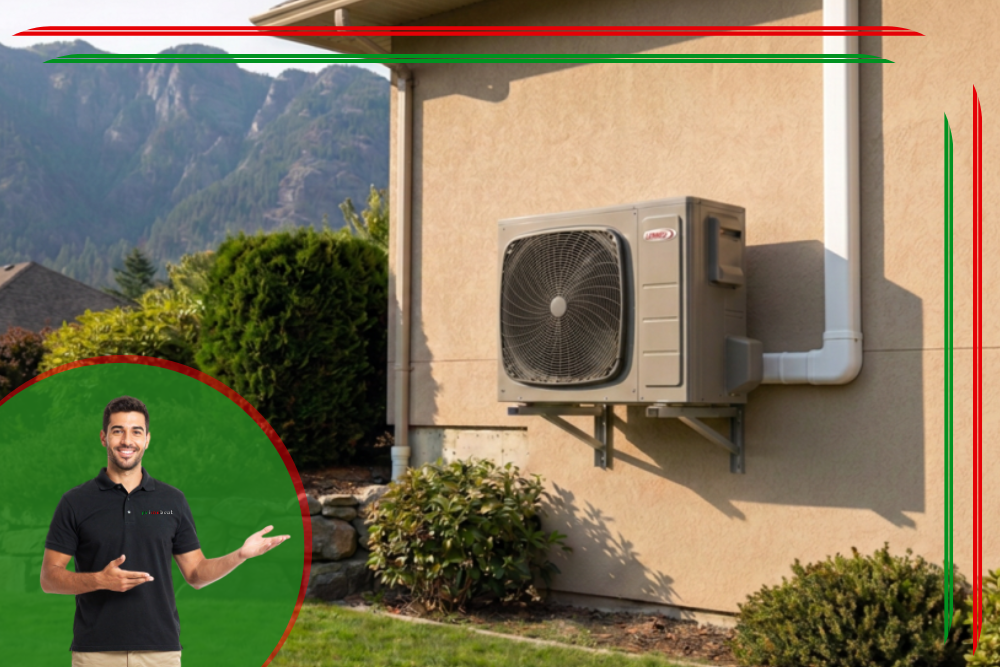
The outdoor unit gets mounted on a level pad or wall brackets, with enough clearance around it for proper airflow. Placement matters more than most people realize. Too close to a wall or hedge and efficiency drops, especially during heating season when the unit is pulling heat from outdoor air.
Running the Refrigerant Lines
Refrigerant lines connect the outdoor condenser to the indoor air handler or evaporator coil. These are insulated copper lines that get carefully routed through the home with minimal aesthetic disruption. Line sets need to be properly sized for the system and the distance involved. Get this wrong and you’re fighting the laws of thermodynamics on every cycle.
Electrical Connections
Heat pumps require a dedicated circuit at the correct voltage and amperage. Our electricians handle panel connections, disconnect boxes, and wiring to both the indoor and outdoor units. If your panel needs an upgrade to support the new system, we flag that during the site assessment so there are no surprises on installation day.
Installing and Commissioning the Air Handler
The indoor air handler gets mounted and connected to the ductwork (on ducted systems) or positioned for the zone it serves (on ductless setups). Once everything is connected, we commission the system. That means checking refrigerant charge with proper gauges, verifying airflow and static pressure, confirming thermostat or control wiring, and running the system through both heating and cooling modes to confirm operation. This step is where we catch anything that’s off before we hand the system over to you.
What are the signs that you should replace your heat pump?
After the Install: What You Should Expect
A properly commissioned heat pump should run quietly and maintain temperature without struggling.
A few things worth knowing before we pack up:
- Heat pumps operate differently than furnaces. They deliver lower-temperature air over longer run times, which is normal and intentional.
- Your thermostat settings may need slight adjustment during the first week as you dial in your preferences.
- Filter access and a quick maintenance schedule walkthrough are part of your install handoff, not an afterthought.
We don’t just leave once the last screw is in. We walk you through what you’re looking at, what to expect from the system, and what to do if anything seems off. If you’ve got questions standing in your living room at the end of the day, that’s exactly when we want to answer them.
Ready to See What the Process Looks Like for Your Home?
Every installation is a little different depending on the home, the equipment, and what’s already in place. If you’re at the point where you want to understand exactly what a heat pump installation would involve for your specific situation, we’re glad to walk you through it. Give our team a call at 778-883-8447 and let’s talk through what makes sense for your home.